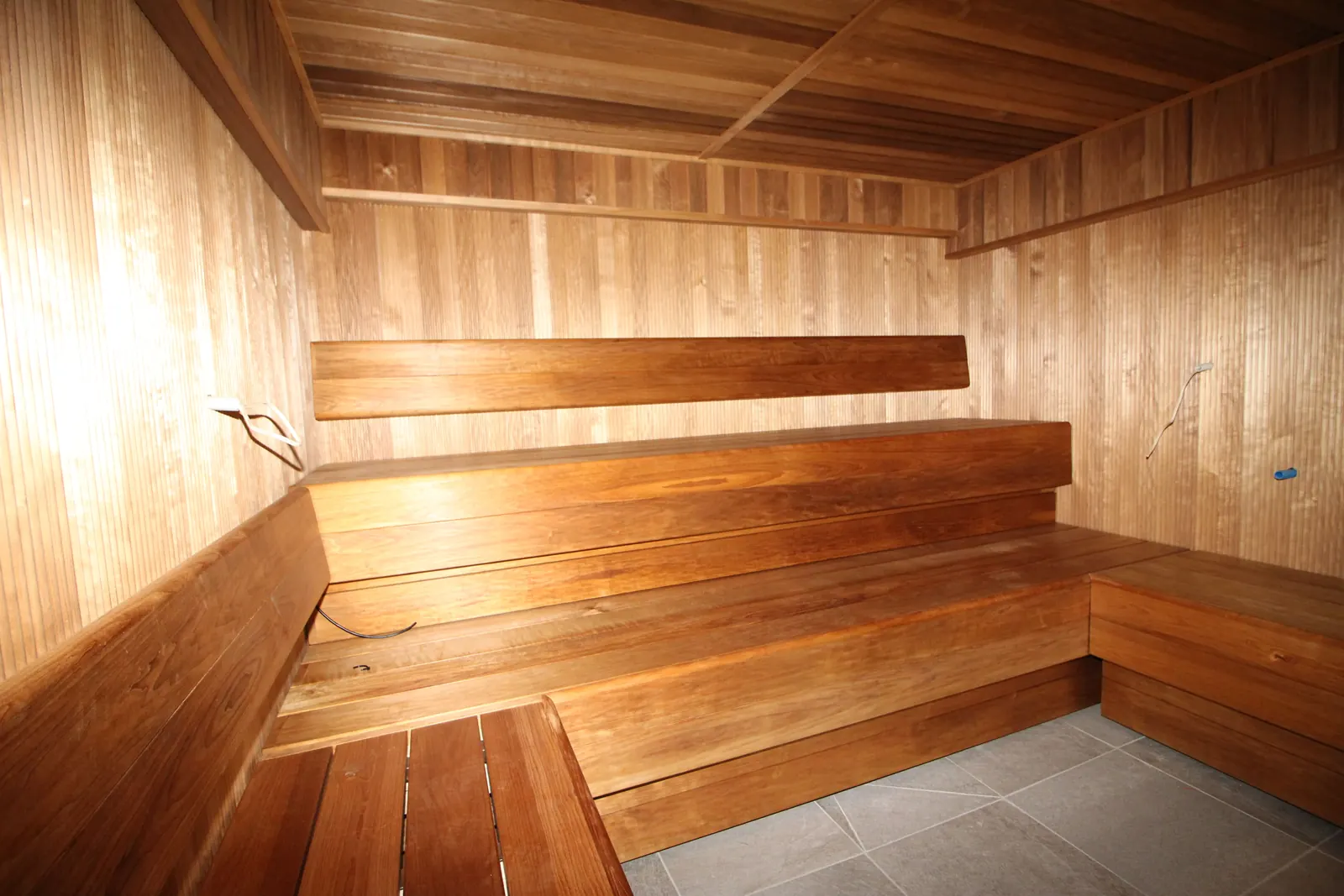
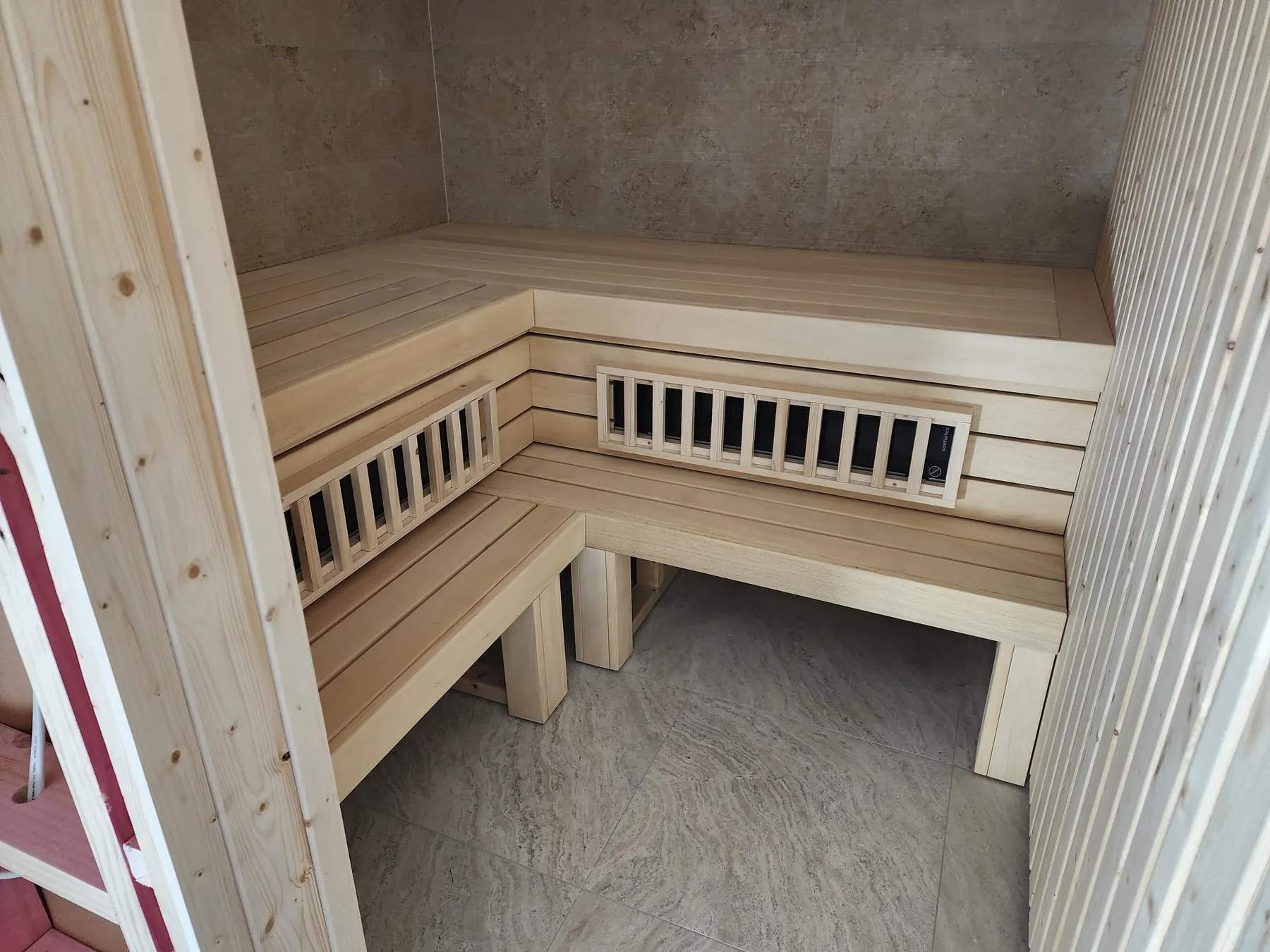
Infrared vs traditional sauna
Two very different ways to get warm. Here's an honest comparison from people who build both, so you can pick the one you'll actually use.
Ask us which suits youHot air and löyly, or gentle radiant warmth.
A traditional sauna heats the air and the stones, and you throw water on the stones for a burst of steam called löyly. An infrared cabin skips all that: panels warm your body directly while the air stays much cooler.
Neither is "wrong". They feel different, they're built differently and they suit different people. If you love proper heat and the hiss of water on hot stones, go traditional. If you want a milder, longer warm-up that's ready in minutes, infrared will make you happy. If you can't decide, a hybrid sauna puts both in one room.
A word of Finnish honesty: to a Finn, an infrared cabin isn't really a sauna. There are no hot stones and no löyly. That doesn't make it bad, it just makes it a different thing, and it's worth knowing what you're buying.
How they compare.
The table below sums up the differences we talk customers through every week. Numbers are typical, not exact: every room, heater and panel is a bit different.
| Traditional sauna | Infrared cabin | |
|---|---|---|
| How it heats | A heater warms the air and a load of stones; you add steam by throwing water on them | Infrared panels warm your skin and body directly; the air stays cooler |
| Typical temperature | About 70–90 °C | About 45–60 °C |
| Steam (löyly) | Yes, as much or as little as you like | No. Water on panels is a no-go |
| Feel | Intense, enveloping heat that rises in waves when you throw water | Softer, steady warmth, more like lying in the sun |
| Ready in | Usually 30–45 minutes with the right heater | A few minutes |
| Session length | Shorter rounds, often 10–15 minutes, with cool-downs between | Longer, gentler sessions |
| Power | An electric heater sized to the room: from a few kW for small rooms up to 22 kW for very large ones; wood-fired needs no power at all | Panels draw a few hundred watts each, so running costs are low |
| Wiring | Bigger heaters often need a dedicated circuit, sometimes three-phase | Usually a standard circuit |
| Building it | Needs a proper vapour barrier, insulation, heat-rated cable and ventilation | Simpler build, but still needs good timber and sensible wiring |
| Lasts | Decades, if built and looked after properly | Depends heavily on the panels and electronics |
On running costs: with power at around 40 cents per kWh, an 8 kW heater running flat out costs about $3.20 an hour. It doesn't run flat out for long, because once the room is hot the heater switches on and off to hold the temperature. A couple of infrared panels cost a fraction of that. More on power and heating.
Why people choose a traditional sauna.
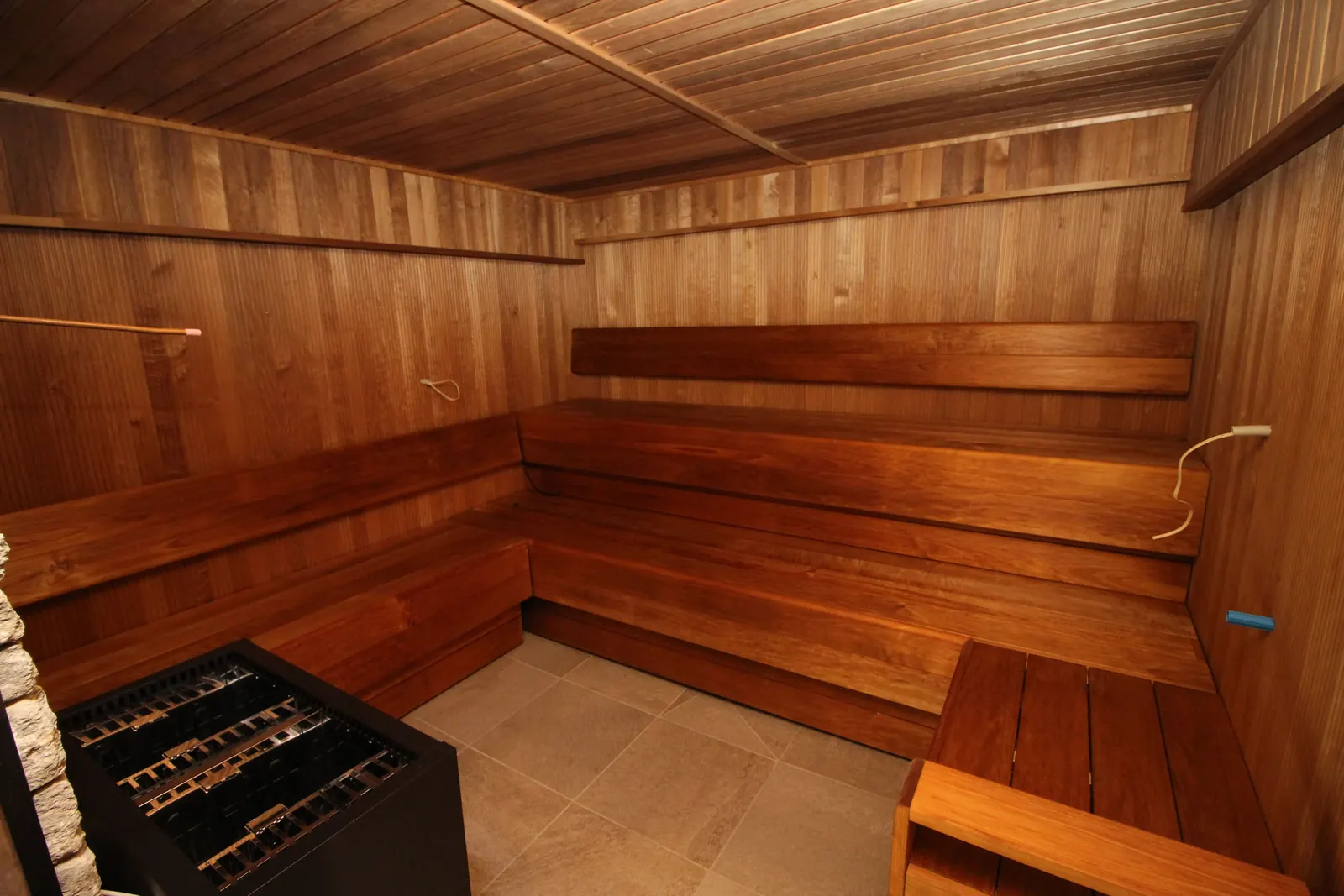
The traditional Finnish sauna is the one we grew up with. It's a social room: you sit together, someone throws a ladle of water, the heat rolls over you and everyone goes quiet for a second. Then you go outside, cool off, and do it again. That rhythm of heat and cooling is what most people in Finland mean by "going to the sauna".
You control the experience. Dry and fierce, or soft and steamy, it's up to you and the ladle. Add a few drops of birch or tar fragrance to the water bucket and the whole room smells of a Finnish summer.
It does take more to build properly. The room has to handle real heat and moisture for decades, so what goes behind the walls matters as much as the timber you see. We cover that in heat-damaged cable and timber, and our sauna timber guide explains the woods we use. Heat comes from an electric heater or a wood-fired stove.
Why people choose infrared.
Infrared suits people who don't love intense heat, or who want a quick, easy session after work without waiting for a room to warm up. Because the air stays cooler, many find it easier to breathe and comfortable to stay in longer.
It's also simpler on the electrics: infrared radiators draw a few hundred watts each, so they can usually run on an ordinary circuit.
What you give up is the stones and the steam. You can't throw water, and the air never gets properly hot. If that's part of what you want from a sauna, infrared on its own will probably leave you wanting more.
Can't choose? Have both.
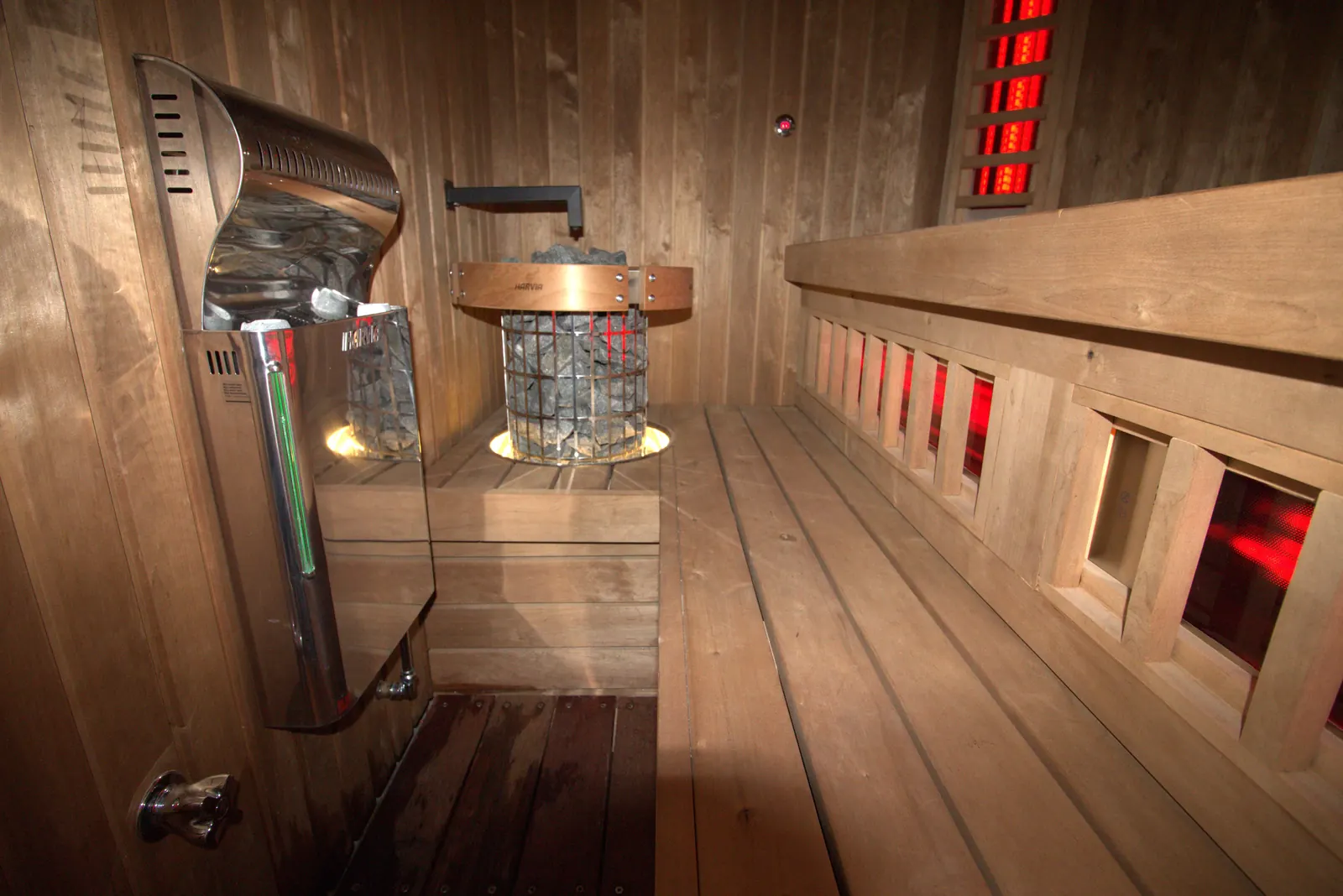
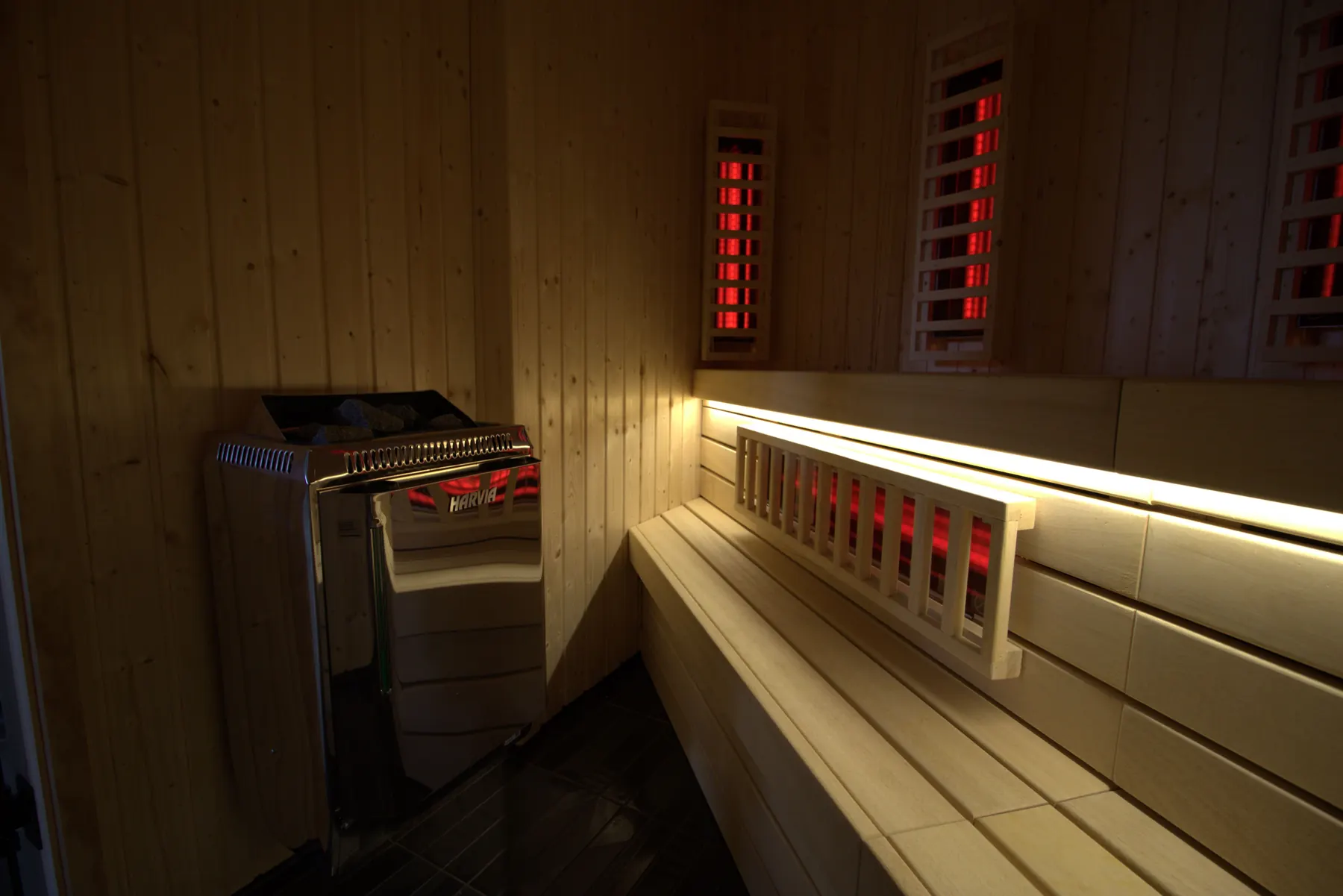
More and more of the rooms we build are hybrids: a proper Finnish heater with stones, plus infrared panels set into the backrests, bench fronts or walls. Run the heater for a traditional session, the panels for a gentle one, or both together.
It's also the honest answer when a couple disagree. One of you gets the löyly, the other gets the soft warmth, and nobody has to give up a corner of the house for two rooms. See our hybrid saunas, or have a look at the hybrids we've built in Torbay, Parnell and Omaha.
Planning ahead helps. Infrared panels can often be added to a traditional sauna later, but turning an infrared cabin into a proper hot sauna usually isn't practical. If you think you might want both one day, tell us at the start and we'll build for it.
Hybrids we've built.
Hybrid
A hybrid sauna in Torbay: a combi heater for löyly or soft steam, plus infrared behind, beside and under you.
Full-spec hybrid
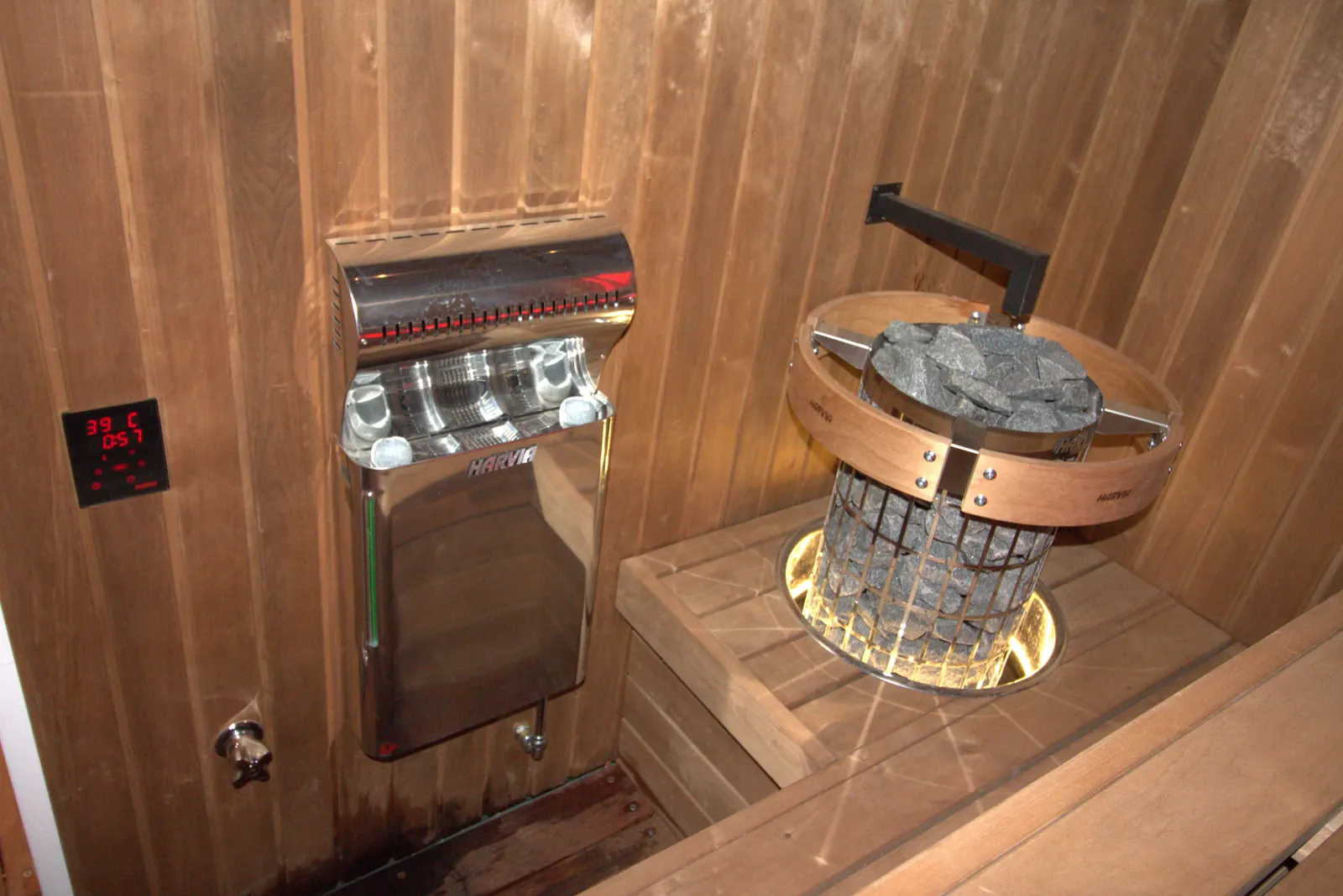
A walk-in wardrobe in Parnell, turned into a full-spec hybrid sauna.
Fully loaded hybrid
A fully loaded hybrid sauna in Omaha, with every piece of modern sauna technology built in.
Common questions.
Is infrared better than a traditional sauna?
Neither is better, they're different. A traditional sauna gives you high heat and löyly; infrared gives you a milder, longer warm. Pick the one you'll use most, or go hybrid.
How hot does an infrared sauna get?
Typically about 45–60 °C. A traditional Finnish sauna usually runs at about 70–90 °C.
Which is cheaper to run?
Infrared, because the panels draw only a few hundred watts each. A traditional electric heater uses more, though less than most people expect: about $3.20 an hour for an 8 kW heater at full power, and less once the room is up to temperature.
Can I add infrared to my existing sauna?
Often, yes. Panels can be fitted into the backrests, bench fronts or walls of many traditional saunas. Send us a photo and we'll tell you what's possible.
Can you pour water on an infrared sauna?
No. Water and infrared panels don't mix. If you want steam, you need a heater with stones.
Send us a few photos of the space and rough measurements. That is usually enough for us to tell you what is possible and give you a price.
Get a quoteOr call 0800 FINNSAUNA. Looking for a heater or timber? Product enquiry.